Health

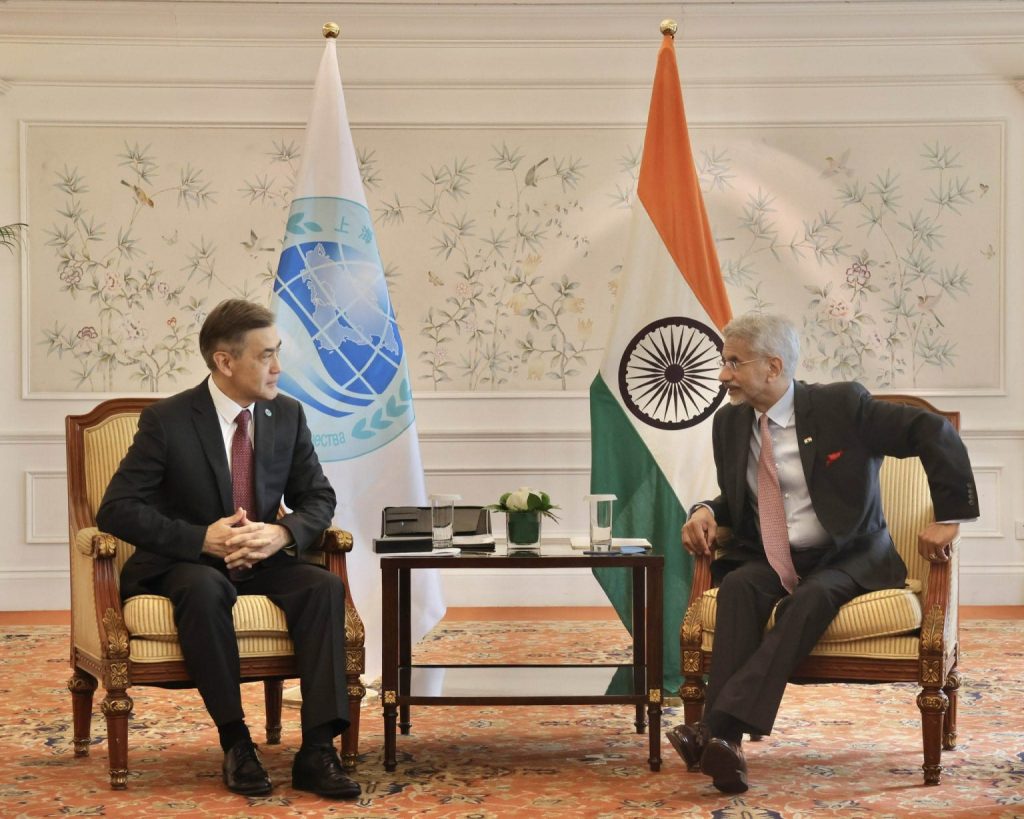
Jaishankar Meets Chinese VP; Says Normalisation Of Ties Can Produce Mutually Beneficial Outcomes

Beijing, Jul 14: External Affairs Minister S Jaishankar on Monday conveyed to Chinese Vice President Han Zheng that continued normalisation of India-China ties can produce mutually beneficial outcomes and an open exchange of views between the two sides is “very important” considering the “complex” global scenario. The external affairs minister held talks with Zheng shortly…

Jaishankar Meets Chinese VP; Says Normalisation Of Ties Can Produce Mutually Beneficial Outcomes
Health International National
Amit Shah Reviews Security Along Indo-Pak Border, Airports With Top Officials
Health National

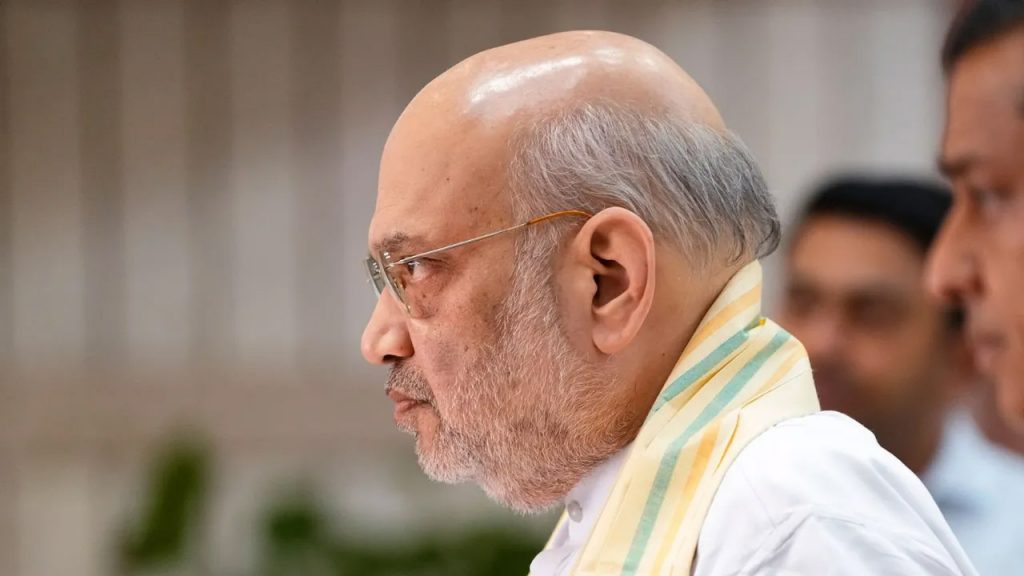
Amit Shah Reviews Security Along Indo-Pak Border, Airports With Top Officials

New Delhi, May 9: Home Minister Amit Shah on Friday reviewed the prevailing situation along India’s border with Pakistan and airports in the country amid the military conflict between the two countries, sources said. The meeting came hours after the Border Security Force said it has foiled an infiltration bid from across the International Border…

Govt committed to offer 200 units free electricity: CM Omar Abdullah

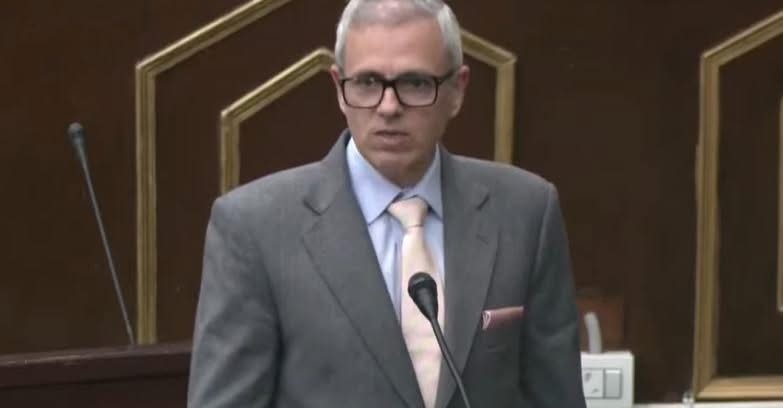
JAMMU: Chief Minister Omar Abdullah on Wednesday said that Jammu and Kashmir aims to achieve self-sufficiency in power generation in next two years, ensuring a reliable electricity supply, and that the government was committed to offering 200 units of free electricity. He said Jammu and Kashmir Power Development Corporation was prioritizing the development of hydroelectric…

Govt committed to offer 200 units free electricity: CM Omar Abdullah
Health Jammu and Kashmir National
Grenade attack on police station in north Kashmir’s Baramulla, no casualties: Officials
header Health Jammu and Kashmir National

Grenade attack on police station in north Kashmir’s Baramulla, no casualties: Officials

BARAMULLA: A suspected grenade attack took place at a police station in north Kashmir's Baramulla district late last night, police said today. "During the night intervening March 4-5, at approximately 2120 hrs, a blast-like sound was heard from the backside of Police Post Old Town, Baramulla, causing concern among the general public. No casualty or…

Business

Arvind Kejriwal skips 3rd ED summons in Delhi excise policy case

NEW DELHI: AAP sources said that Delhi Chief Minister Arvind Kejriwal on Wednesday disregarded the ED's third summons in the Delhi excise policy case and instead sent a written response denouncing the notice as unlawful. While claiming that Kejriwal was prepared to assist the agency, the Aam Aadmi Party said that the summons was sent with the goal of apprehending him. "Why was the notice sent so close to the election season?" The party claimed that the notice is an attempt to prevent Kejriwal from participating in election campaigning. Kejriwal was called in by the Enforcement Directorate on Wednesday to be questioned about a money laundering case related to excise policies.Kejriwal, who is also the convener of the AAP, received three ED notices in a row after he turned down two previous summonses from the federal agency for November 2 and December 21. [caption id="attachment_8250" align="alignnone" width="300"] Arvind Kejriwal skips 3rd ED summons in Delhi excise policy case[/caption]    

SP South asks traders to install CCTVs

JAMMU: South of SP City A police public meeting was conducted by Shaheen Wahid, SDPO City South, SHO PS Gandhi Nagar, I/C PP Nehru Market, Traders Federation Ware house, Nehru Market Jammu, and several Union Heads of Transporters. A number of prominent individuals, including traders and transporters, took part in the gathering. There was a tattered conversation about drugs, theft cases, and other relevant topics. They were also briefed by SP City South Jammu to notify the local PS/PP of any information they learn about drug trafficking. Other significant topics covered included cases of theft, poorly maintained roads, youth employment in the area, etc.It was suggested during the meeting that Traders Federation Ware House inform the drivers not to leave any unattended material in their cars because doing so could endanger the lives of commuters. They were also warned not to leave their cars unattended and reminded of the potential dangers posed by sticky bombs. In order to maintain a closer eye on any suspicious movements or objects, SP City South Jammu has appealed to the Traders Federation Ware house, Nehru Market Jammu, to install CCTV cameras in their business establishment and assign watchmen at night. [caption id="attachment_8247" align="alignnone" width="300"] SP South asks traders to install CCTVs[/caption]  

Vice-President to visit J&K on Jan 4

NEW DELHI: Vice-President Jagdeep Dhankhar will travel to Jammu and Kashmir on January 4th, when he will be the chief guest at the university's eighth convocation, Sher-e-Kashmir University of Agricultural Sciences and Technology (SKUAST). A government handout issued today stated, "During his one-day tour, Shri Dhankhar will be the Chief Guest at the 8th Convocation of Sher-e-Kashmir University of Agricultural Sciences and Technology (SKUAST), Jammu." Vice-President Dhankhar will preside over both the convocation ceremony and the opening of the Biotech Startup Expo in Kathua.   [caption id="attachment_8241" align="alignnone" width="300"] Vice-President to visit J&K on Jan 4[/caption]  

Amit Shah instructs officials to strengthen counter-terror operations in J&K following due procedures

NEW DELHI: On Tuesday, Union Home Minister Amit Shah emphasised the need to eradicate the terror ecosystem entirely and gave officials orders to bolster counter terrorism efforts in Jammu and Kashmir. In addition to recommending security agencies' appropriate deployment in Jammu and Kashmir's high-risk areas, Shah emphasised that all necessary protocols should be followed when carrying out counterterrorism operations. An official spokesperson said that the directives were issued during a high-level meeting that took place at the North Block in this city and during which the home minister examined the security situation in Jammu and Kashmir. The meeting was attended by top intelligence and security agency officials, Chief of Army Staff General Manoj Pande, National Security Advisor Ajit Doval, and Lieutenant Governor of Jammu and Kashmir Manoj Sinha.In order to eradicate the threat of terrorism, Shah reviewed the security agencies' area domination plan for Jammu and Kashmir during the meeting. He directed officials to bolster counterterrorism operations and emphasised the necessity of totally eliminating the terror ecosystem while examining the security grid's operation and the state of general security in Jammu and Kashmir. According to the spokesperson, the home minister also gave the security agencies advice on how best to deploy personnel in high-risk areas. He said that the government will continue to take a zero-tolerance stance against terrorism under the direction of Prime Minister Narendra Modi. Two weeks had passed since terrorists ambushed five soldiers in the Poonch district, killing them. Outrage erupted when three civilians, ages 27 to 42, who had allegedly been picked up by the Army for questioning, were discovered dead the day following the terror attack on December 21. Following these incidents, Poonch was visited by Army Chief of Staff Pande and Defence Minister Rajnath Singh. The Jammu and Kashmir government had previously declared that legal action had been started and that compensation and jobs would be given to the families of the civilians who had died. During the review meeting, the home minister expressed gratitude to the Union Territory administration and security agencies for their efforts in reducing terror-related incidents, improving law and order, and preventing infiltration. Jammu and Kashmir has seen sporadic violence since the start of 2023. 54 people, including 28 terrorists and 19 security personnel, were killed in a series of encounters that occurred in the Jammu and Kashmir districts of Rajouri, Poonch, and Reasi last year, according to officials. The increase in violence has been attributed by the authorities to "desperate attempts from across the border" to resurrect terrorism in the area. In the Poonch district, there were 15 terrorists and five security personnel slain, while 31 people—ten terrorists and fourteen security personnel—were killed in Rajouri. In the district of Reasi, three terrorists were killed. [caption id="attachment_8237" align="alignnone" width="300"] Amit Shah instructs officials to strengthen counter-terror operations in J&K…

Shah Chairs High-Level Security Review Meeting On J&K

New Delhi, Jan 2: Amit Shah, the Union Home Minister, presided over a high-level security review meeting on Jammu and Kashmir on Tuesday. The Home Minister will go over the security grid's operation and other security-related topics during the meeting. According to reports, the Home Minister is assessing security in Jammu and Kashmir in light of recent assaults that have occurred there. Shah also emphasised better coordination between the Army, Police, and Central Armed Police Forces (CAPFs) stationed in Jammu and Kashmir, as well as complete area domination, during the meeting.Additionally, the Home Minister emphasised the necessity of enhancing and fortifying local intelligence within the Union Territory. It has been learned that the Home Minister will examine the zero-terror plan, the area dominance plan, the state of law and order, the UAPA cases, and other security-related matters. Along with other concerned officials from the Ministry of Home Affairs and Jammu and Kashmir, the meeting was attended by Lieutenant Governor Manoj Sinha of Jammu and Kashmir, Chief Secretary Atal Dulloo, Director General Dinkar Gupta of the National Investigation Agency, and Director Generals of the Central Reserve Police Force and the Border Security Force. In attendance at the meeting were Army Chief General Manoj Pande, Union Home Secretary Ajay Bhalla, Director of Intelligence Bureau Tapan Deka, and National Security Advisor Ajit Doval.The meeting took place a few days after terrorists opened fire on two army vehicles travelling through Dera Ki Gali in Rajouri's Poonch region on December 21, 2018, resulting in the deaths of four soldiers and the injuries of three others. Five soldiers, two of whom were captains, were also killed in action in November of last year following the Army and its special forces' anti-terror operation in Rajouri's Kalakote. Ten soldiers lost their lives in action during two separate attacks in the Rajouri-Poonch area in April and May of 2023. Between 2003 and 2021, this area had been relatively free of acts of terrorism; however, following that, encounters became more frequent. In the course of 2021 and 2022, anti-terror operations in the region resulted in the deaths of over 35 soldiers.According to sources in the security wing, Pir Panjal, which includes Rajouri district in addition to Poonch and portions of Reasi districts, has seen an increase in militancy in recent years. Several Army soldiers have died in the region after being ambushed by militants. On January 13, 2018, the Home Minister presided over a comparable high-level review meeting regarding the security situation in Jammu and Kashmir. During the meeting, she declared that all security agencies are waging a fierce war against terrorism in accordance with Prime Minister Narendra Modi's zero-tolerance policy.Additionally, he had stated that a 360-degree security system would be reinforced even more in order to totally eradicate terrorists' networks of support and information. The Minister also held a review meeting on April 13, 2018, in the nation's capital, to discuss the security situation in the Union Territory. During the meeting, he went over how the security grid operated and other security-related topics. He also reaffirmed that the Indian government, led by Prime Minister Modi, is dedicated to zero tolerance for terrorism. [caption id="attachment_8224" align="alignnone" width="300"] Shah Chairs High-Level Security Review Meeting On J&K[/caption]  

Don’t Create Panic, Enough Stock Of Petrol, Kerosene, LPG In Valley: Div Com Kashmir

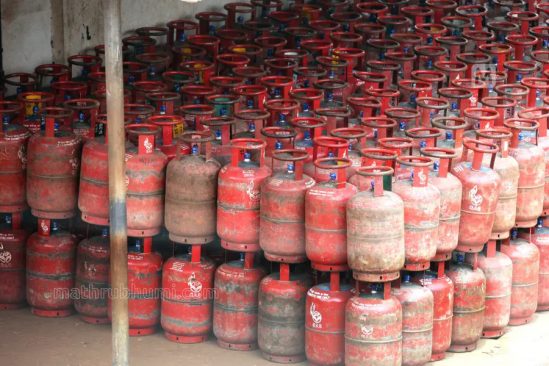
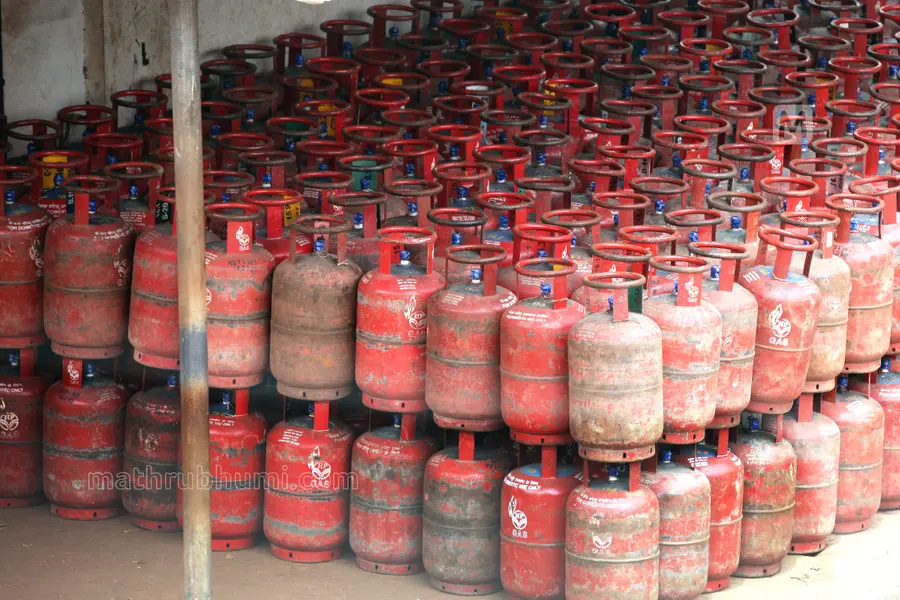
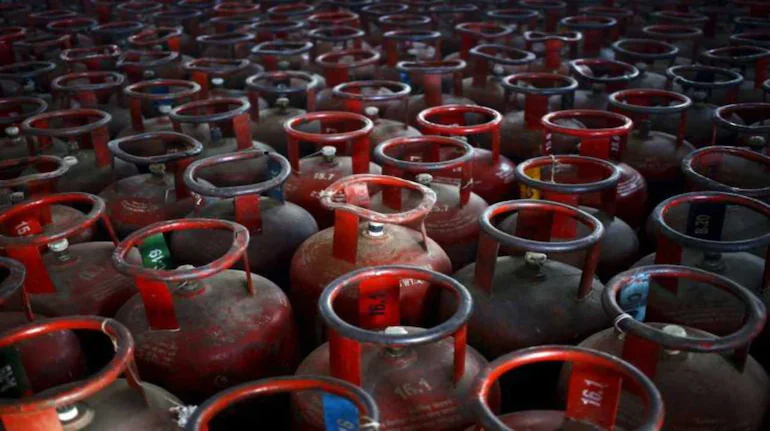
Srinagar, Jan 2: Divisional Commissioner for Kashmir Vijay Kumar Bhiduri asked people on Tuesday not to incite panic by swarming petrol stations with cars and bottles, saying that the Valley had nearly a month's worth of petrol, diesel, kerosene and LPG in stock. According to the Divisional Commissioner, there is no shortage of petrol, kerosene or LPG, so people swarming the petrol pumps with cars and petrol bottles will cause panic. "We have nearly a month's worth of supplies of petrol, diesel and LPG in Kashmir," Bhiduri declared. He advised people to maintain their composure rather than panic. The strike by transporters won't have an impact on Kashmir. The Transporters are having parleys. The Divisional Commissioner stated, "The divisional administration in Kashmir is dedicated to making sure the people shouldn't experience any shortages of necessities, including petrol and LPG during the winter. [caption id="attachment_8208" align="alignnone" width="300"] Don’t Create Panic, Enough Stock Of Petrol, Kerosene, LPG In Valley: Div Com Kashmir[/caption]          

Pakistan Likely To Get USD 700 Million From IMF As Next Tranche Of Bailout This Month: Report

Islamabad, Jan 2: Low on funds According to a media report on Tuesday, Pakistan is anticipated to receive USD 700 million as the next installment of the IMF's bailout when the global lender's Executive Board convenes on January 11. According to the Dawn newspaper, the board of the International Monetary Fund, based in Washington, is scheduled to discuss and possibly approve the disbursement of the next USD 700 million tranche for Pakistan under the current USD 3 billion Stand-By Arrangement (SBA).The IMF Executive Board calendar shows that meetings will take place on January 8, 10, and 11, with a discussion of Pakistan's case on the final day. The USD 3 billion current IMF programme is scheduled to end in the second week of April, with about USD 1.8 billion still to be disbursed. In July, the first installment of USD 1.2 billion was made available. Regarding the first review under Pakistan's SBA, a Staff-Level Agreement was reached in November 2023 between IMF staff and Pakistani authorities.The Executive Board of the IMF must approve this agreement. Although the board was supposed to approve the process in December, it appears that January 11 has been set aside for it. This is a significant development for Pakistan's economy because the next tranche's disbursement may offer much-needed financial support. The future course of Pakistan and the IMF's continuing economic cooperation will be determined by the results of the next meeting. In a separate statement, the IMF stated that "significant progress has been made over the FY23 budget, and discussions between the IMF staff and the authorities on policies to strengthen macroeconomic stability in the coming year continue."The IMF also updated its data and projections for Pakistan's economy, which showed a difficult future for the nation in 2024. The real GDP is expected to contract by 0.5% this year, according to the IMF's most recent estimates, suggesting possible economic challenges. Concurrently, a notable rise is predicted for the Consumer Price Index in 2024. This points to a significant increase in inflation, creating more difficulties for the stability of the national economy. Even though the State Bank's reserves unexpectedly increased by USD 853 million in the week ending December 22, 2023, Pakistan is eager to get the second tranche, which will demonstrate that Islamabad has complied with the IMF's demands for economic recovery.The Ministry of Finance recently declared that it had successfully exceeded the IMF's target of collecting Rs 4.425 trillion in revenue between July and December by Rs 43 billion. Pakistan is more likely to get the remaining USD 3 billion SBA funding in March after obtaining the second tranche of USD 700 million this month. But, the country has already been informed by acting Finance Minister Shamshad Akhtar that in order to boost the economy, a new deal with the IMF must be signed.Pakistan will never be able to bid the lending agency farewell. Pakistan continues to experience extremely high inflation despite difficult circumstances; in December, it was 29.7%, up from 29.2% in November. According to the most recent data, Pakistan has participated in 24 agreements with the IMF since joining on July 11, 1950. Dawn claims that this demonstrates the nation's historical reliance on IMF assistance to handle economic difficulties.Pakistan has entered into 23 agreements with the IMF in the last few decades as a result of its ongoing balance-of-payments issues, which are primarily caused by a growing trade deficit. When the nation encountered yet another balance-of-payments crisis in 2019, the current programme with the lender was agreed upon. Since then, Pakistan has received payments from the IMF totaling approximately $4 billion, leaving a $2.6 billion balance. [caption id="attachment_8188" align="alignnone" width="300"] Pakistan Likely To Get USD 700 Million…

Secularism Has Become Pejorative For Those Now In Power: Sonia Gandhi

NEW DELHI, Jan 2: Congress leader Sonia Gandhi described secularism as the cornerstone of India's democracy and claimed that the term secular is being used as a "pejorative" by those in positions of power, which is causing more polarisation in society. They claim to be dedicated to "democracy," but they also undermine the checks and balances that are supposed to keep it functioning smoothly. In a signed essay for the Manorama Yearbook 2024, Gandhi stated, "The train tracks meant to guide our nation to harmony are being damaged and the results are already being seen in the increased polarisation in society." Secularism and democracy have a close relationship; they work together like two rails on a track to steer the current administration towards the goal of a peaceful society.These are words that are common to all of us; they appear in speeches, debates, civics textbooks, and the Preamble to the Constitution. Even with this familiarity, these concepts' deep meanings are frequently elusive. Every citizen will be better able to comprehend India's past, current difficulties, and future course if they have a clear understanding of these terms, according to the former head of the Congress. Gandhi noted that there are various ways to understand secularism, but that the definition established by Mahatma Gandhi in his well-known phrase, "sarva dharma sama bhaava," is the one that is most pertinent to India.Gandhi recognised the fundamental similarity among all religions. She is quoted as saying in a release published by Malayala Manorama here: "Jawaharlal Nehru was deeply conscious of India being a multi-religious society, so he constantly strove to establish a secular state." She further stated that this concept was developed and implemented by the Indian Constitution writers, under the direction of Dr. B R Ambedkar, to create a distinct secular democracy. "The government...upholds everyone's right to practise their religion. It contains unique clauses designed to safeguard minorities' welfare. The senior Lok Sabha MP stated, "Promoting harmony and prosperity between all the diverse groups in our society is always the guiding principle of Indian secular democracy."Gandhi, who presided over the Congress party for more than 20 years—from 1998 to 2017 and from 2019 to 2022—said that India's remarkable diversity has always served as its defining characteristic. Indeed, since "diversities" include a wide range of religions and beliefs, languages and cultural practices, regions and ecologies, histories and traditions, it makes more sense to refer to them as "diversities" in our society than as just "diversity." However, our Founding Fathers left us with the legacy of Unity in Diversity because there has always been a sense of overarching unity, she contended."When diversity is celebrated, as it is in our wonderful Constitution, which is currently under attack, it strengthens our unity and solidarity," the speaker stated. Gandhi also brought up a crucial point about how democracies operate. A majority of votes determines the formation of the government in a democracy. But can those in the majority always have the upper hand over the rest if they agree? What occurs when a small group's fundamental interests are harmed? What should be done if a temporary majority insists on making a decision that could have serious ramifications down the road? But do they have the right to rule without opposition if a stable but small majority is established? she questioned.In multicultural nations like India, where people hold a great deal of significance for one another's numerous identities, this question is particularly serious. "It does not help peace or harmony in society if people worry that their language, religious practice, or way of life could be permanently threatened only because they were not many in number," the speaker said. Jawaharlal Nehru once observed that "democracy is good." Gandhi used this to argue that democracy is not a perfect system. Because other systems are worse, I say this. It contains flaws as well as strengths.The freedom fighters established guidelines to prevent these maladies, such as a written Constitution, citizens' fundamental rights against the government, and the secularism principle, because they knew from the experience of democracy in other nations that the system is prone to illnesses. She stated: "It is time for us too, to find our own solutions to the challenges of today, and in doing so, serve and honour our nation." She noted that progressive people in India have always tried to find solutions to the times' challenges. Knowing from the experience of democracy in other countries that the system is prone to illnesses, the freedom fighters established guidelines to prevent these maladies, such as a written Constitution, citizens' fundamental rights against the government, and the secularism principle. She said: "It is time for us too, to find our own solutions to the challenges of today, and in doing so, serve and honour our nation." She pointed out that progressive Indians have always looked for answers to the problems of the day. [caption id="attachment_8185" align="alignnone"…