Health

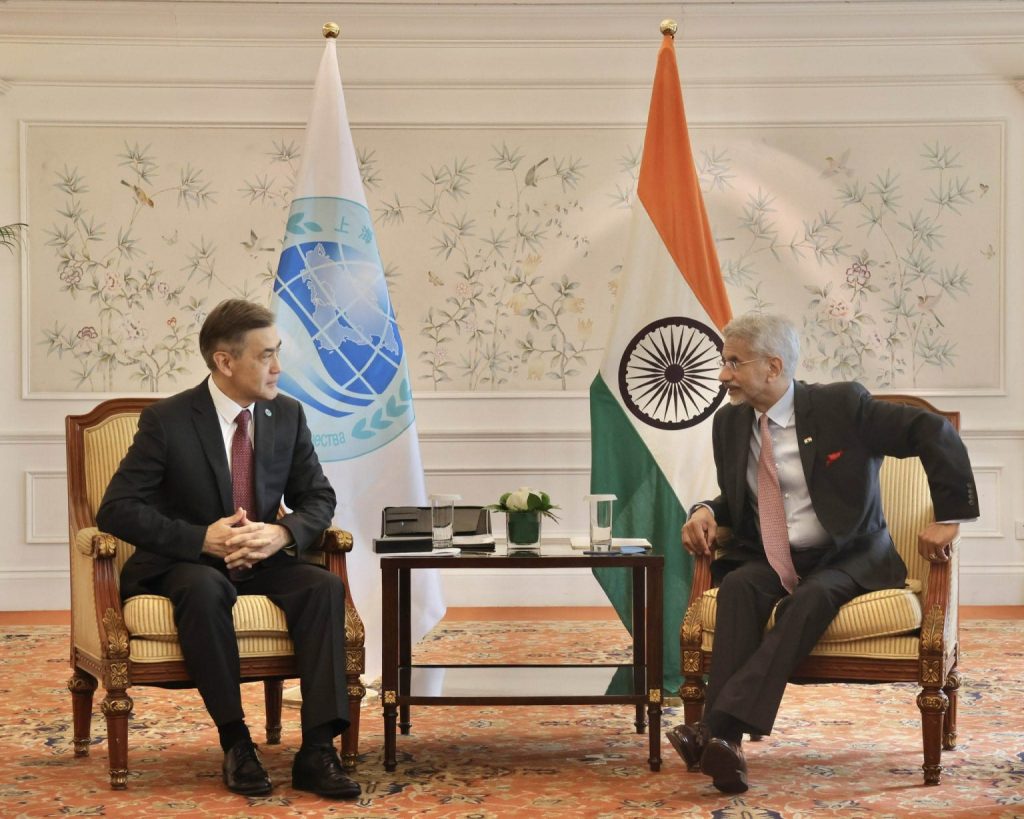
Jaishankar Meets Chinese VP; Says Normalisation Of Ties Can Produce Mutually Beneficial Outcomes

Beijing, Jul 14: External Affairs Minister S Jaishankar on Monday conveyed to Chinese Vice President Han Zheng that continued normalisation of India-China ties can produce mutually beneficial outcomes and an open exchange of views between the two sides is “very important” considering the “complex” global scenario. The external affairs minister held talks with Zheng shortly…

Jaishankar Meets Chinese VP; Says Normalisation Of Ties Can Produce Mutually Beneficial Outcomes
Health International National
Amit Shah Reviews Security Along Indo-Pak Border, Airports With Top Officials
Health National

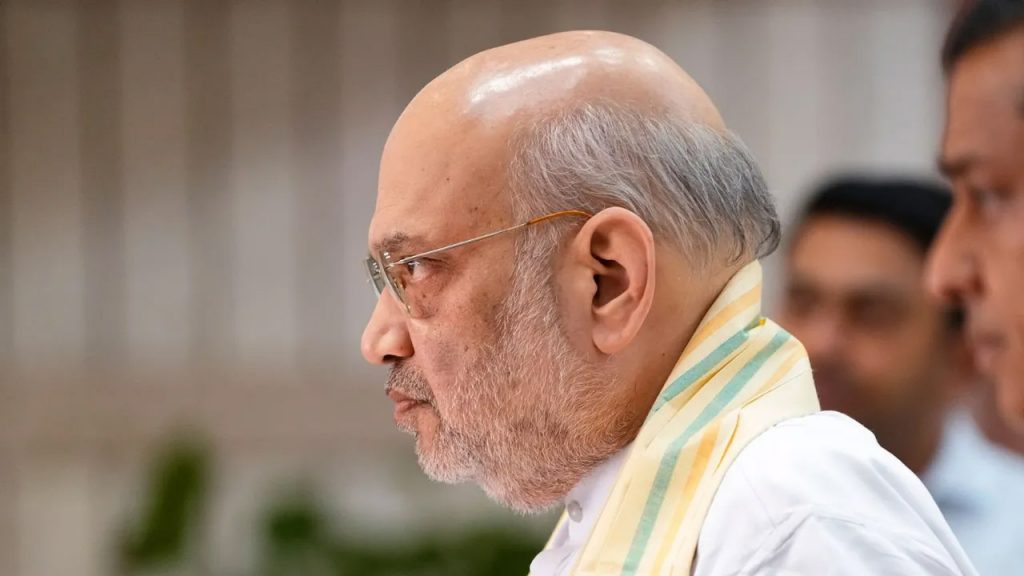
Amit Shah Reviews Security Along Indo-Pak Border, Airports With Top Officials

New Delhi, May 9: Home Minister Amit Shah on Friday reviewed the prevailing situation along India’s border with Pakistan and airports in the country amid the military conflict between the two countries, sources said. The meeting came hours after the Border Security Force said it has foiled an infiltration bid from across the International Border…

Govt committed to offer 200 units free electricity: CM Omar Abdullah

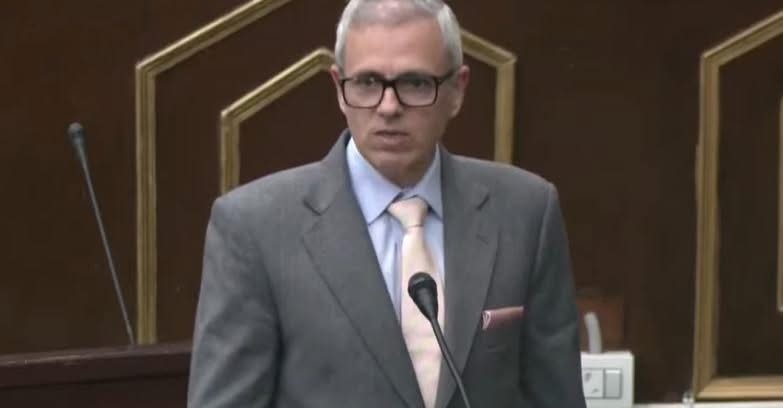
JAMMU: Chief Minister Omar Abdullah on Wednesday said that Jammu and Kashmir aims to achieve self-sufficiency in power generation in next two years, ensuring a reliable electricity supply, and that the government was committed to offering 200 units of free electricity. He said Jammu and Kashmir Power Development Corporation was prioritizing the development of hydroelectric…

Govt committed to offer 200 units free electricity: CM Omar Abdullah
Health Jammu and Kashmir National
Grenade attack on police station in north Kashmir’s Baramulla, no casualties: Officials
header Health Jammu and Kashmir National

Grenade attack on police station in north Kashmir’s Baramulla, no casualties: Officials

BARAMULLA: A suspected grenade attack took place at a police station in north Kashmir's Baramulla district late last night, police said today. "During the night intervening March 4-5, at approximately 2120 hrs, a blast-like sound was heard from the backside of Police Post Old Town, Baramulla, causing concern among the general public. No casualty or…

Business

Set in motion the process for establishment of NDPS courts: CS
header Jammu and Kashmir National Political

Set in motion the process for establishment of NDPS courts: CS

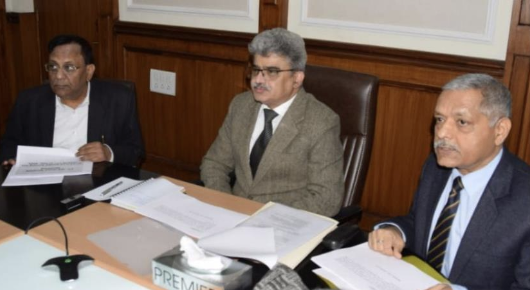
JAMMU: At today's 8th UT level Apex committee meeting of NCORD, Chief Secretary Atal Dulloo made a strong impression on the administration to start the process of establishing NDPS courts so that convicts under this act can get a speedy trial. In addition to other concerned senior officers from civil and police administration, the meeting was attended by the following: ACS, Home; Spl DG, Crime; Principal Secretary, PWD; Principal Secretary, School Education; ADGP, Jammu; Commissioner Secretary, GAD; Commissioner Secretary, Social Welfare; Divisional Commissioner, Kashmir/Jammu; IGP, Kashmir; Deputy Commissioners; and representatives from NCB, SIA, Prosecution. First, the Chief Secretary asked for the total number of UT detentions that occurred in the previous year as well as the percentage of court convictions that resulted in a successful verdict.He tasked them with improving the ability of the relevant police officers in order to prepare cases more expertly and with a higher conviction rate. Dulloo contended that since the necessary laws are in place and the police are present in sufficient numbers, it is imperative that the drug problem be addressed harshly in order to eradicate it from the UT. He emphasised the importance of making the best use of their resources in order to obtain information and turn over control of the major suppliers who are essential in assisting with this illegal trade. Additionally, he requested that additional deterrents be put in place and that those found guilty of running the drug trade in this country receive model sentences. He requested that audiovisual data from every drugstore's CCTV footage be gathered, and that it be analysed using current artificial intelligence tools to look for patterns about potential operators. Regarding the status of properties sealed under the PIT NDPS Act, he requested a report from the DCs. The Chief Secretary further instructed the health department to employ the top psychiatrists in the department to research the models used in drug addiction treatment centres throughout J&K to treat victims of this threat. Additionally, he requested that they establish a strong protocol in accordance with national standard operating procedure (SOP). In this meeting, the ACS Home's RK Goyal stated that since the concerned police officers now have more capability and have access to the facilities they need to test samples, this should inevitably lead to more convictions and quicker trials. He requested that they improve their effectiveness and aim to convert the majority of the incarcerations into legal convictions. Special DG for Crime, AK Choudhary, revealed in his presentation that by focusing mAdditionally, he disclosed that strong measures are being taken to dissuade such as reporting cases to SIA and seizing the properties of those engaged in this illicit activity.ore on NDPS cases this year, there has been a significant increase in the number of detentions and convictions. [caption id="attachment_8166" align="alignnone" width="300"] Set in motion the process for establishment of NDPS courts: CS[/caption]          

Poor, deprived sections truly uplifted under Modi govt: Raina
header Jammu and Kashmir National Political

Poor, deprived sections truly uplifted under Modi govt: Raina

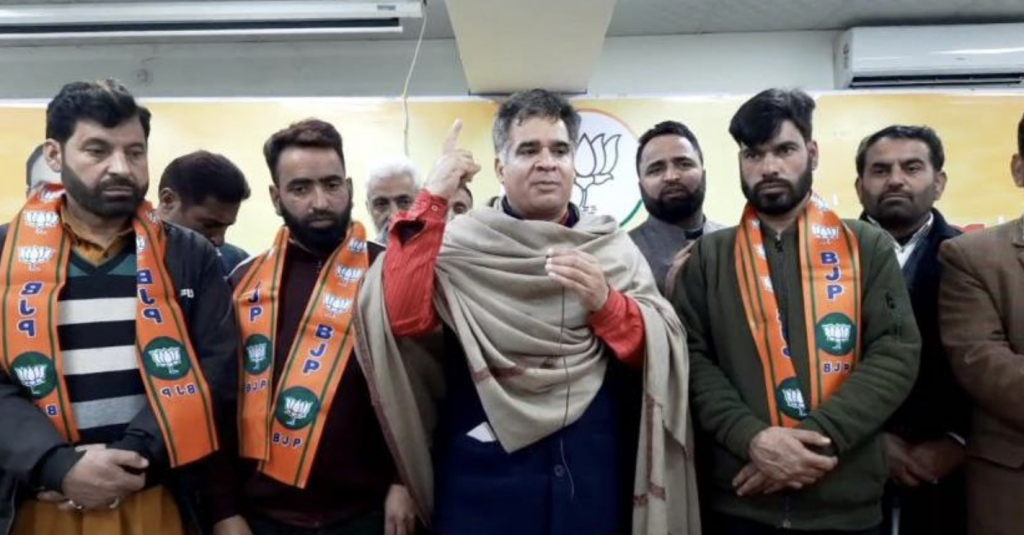
JAMMU: During a welcoming event at the party headquarters in Trikuta Nagar, Jammu, Ravinder Raina said that the Modi administration has really lifted the underprivileged and impoverished sections of society. The president of the Bharatiya Janata Party (JBP) in Jammu and Kashmir, Ravinder Raina, welcomed several Gujjar Bakarwals into the party, led by well-known figures from the NC, PDP, and Congress. Present were Mukhtar Ahmed Phambra, the general secretary of the J&K BJP ST Morcha, Prabhari Choudhary Haroon, and President Choudhary Roshan Hussain.Among the notable people who attended were Choudhary Gulzar from the National Conference, Mohabbat Ali from the Congress, and Hyder Ali from the PDP. According to Ravinder Raina, a significant number of Jammu and Kashmiri citizens are joining the BJP in large numbers because they are happy with the government's policies. He said that the welfare of the underprivileged and marginalised groups is a concern of the BJP government, which is led by Prime Minister Narendra Modi, and that the Modi administration has worked to promote their welfare through all of its policies. "Strong willed and dedicated government has taken robust decisions towards the welfare of the poor and deprived sections, which ensured that they are truly uplifted under the Modi government" , Raina stated.According to Roshan Choudhary, the BJP has worked for the welfare of groups that previous administrations had only used as a source of votes. According to Haroon Choudhary, the regular joinings of the ST community show that they have complete faith in the policies of the BJP government. Newcomers commended the Modi administration for its dedication to reaching out to every village in the area, claiming to have personally witnessed the remarkable progress made possible by the Modi administration. They declared that in addition to working as committed party cadres, they would work tirelessly for the country and society. [caption id="attachment_8158" align="alignnone" width="300"] Poor, deprived sections truly uplifted under Modi govt: Raina[/caption]  

CJI Refuses To Respond To Criticism Over Judgements On Scrapping Article 370, Same-Sex Marriage

New Delhi, Jan 1: Chief Justice of India DY Chandrachud stated tersely that judges decide cases "according to the Constitution and the law" and declined to add to the controversy surrounding the Supreme Court's unanimous decision upholding the repeal of Article 370 of the Constitution, which granted the former state of Jammu and Kashmir special status. In a rare interview, the Chief Justice of India also opened up about the five-judge constitution bench ruling against legalising same-sex unions, stating that a judge's decision in a case is never personal. However, the "long and hard battle" queer couples fought for the realisation of their rights was acknowledged by India's 50th Chief Justice.On October 17, a five-judge Supreme Court panel recognised queer people's equal rights and protection but declined to legalise same-sex unions. "Once a case is decided, you sort of step back from the result. As judges, we never take the results personally. I've never regretted anything. Yes, I have frequently been in the majority as well as the minority. However, a crucial aspect of a judge's life is to never align oneself with a cause. "I leave it at that, having decided a case," he uttered.In response to criticism of the Supreme Court's ruling on Article 370, he stated that judges express their opinions through their decisions, which are then public knowledge and open for debate by anyone in a free society. As far as we are concerned, we make decisions in accordance with the law and the Constitution. I don't believe it will be appropriate for me to address the criticism or provide an explanation for my decisions. The reason included in the signed judgement reflects what we have stated in my judgement, so I must end it there," the CJI stated. [caption id="attachment_8146" align="alignnone" width="300"] CJI Refuses To Respond To Criticism Over Judgements On Scrapping Article 370, Same-Sex Marriage[/caption]  …

‘Mann Ki Baat’: PM Modi says NEP helping remove language handicaps, bats for learning sans obstacles

NEW DELHI: Prime Minister Narendra Modi on Sunday recalled a time in the past when children would frequently stop attending school or give up entirely due to language barriers, and said that the new National Education Policy was working to remove these barriers to education. During the last 'Mann Ki Baat' speech of the previous year, Prime Minister Modi stated that the goal of the Centre is to ensure that language does not become an obstacle to education or a child's overall development."Many kids in our nation would quit school in the middle of their studies because of language barriers. These barriers to education and a child's overall development are being removed with the aid of our new National Education Policy. We want language to never stand in the way of a child's education or advancement," Prime Minister Modi declared on the 108th episode of his monthly radio show. On July 29, 2020, the Centre introduced the National Education Policy (NEP), which aims to implement significant changes in schooling. The policy, according to the government, would guarantee universal access to education from pre-primary through grade 12. All children between the ages of three and seven will receive early childhood care and education under the NEP.Additionally, a new curriculum and pedagogical structure (5+3+3+4) will be implemented, with a four-year graduation requirement and no matriculation. In addition, PM Modi stated in his radio speech that, in contrast to earlier broadcasts, he feels a particular place in his heart for the most recent one. "We are currently on episode 108 of our journey together. I find the number 108 to be very significant, and I research its holiness thoroughly. The number 108 is connected to great faith. It can be found in 108 bells, 108 divine locations, 108 steps in temples, 108 beads in a rosary, and 108 times of chanting. "The 108th episode of 'Mann Ki Baat' is extra special for me because of this," he stated.In his speech, Prime Minister Modi also mentioned the Artificial Intelligence (AI) tool called "Bhashini," which he utilised to translate in real time for his Tamil-speaking audience during the Kashi Tamil Sangamam earlier this month. "I was speaking in Hindi from the stage, but the attendees from Tamil Nadu could follow my speech at the same time as everyone else thanks to the AI tool Bhashini." The visitors to the Kashi-Tamil Sangamam were clearly excited about this new experiment," he said."You can only image the revolutionary shift that will occur if this technology is incorporated into our courts, schools, and medical facilities on a larger scale. I would strongly advise the younger generation to investigate artificial intelligence (AI) tools further, particularly those related to real-time translations, and ensure that they are 100% reliable. They will have the responsibility in the upcoming days to not only preserve but also advance our original languages, according to Prime Minister Modi. He predicted that soon, people would be able to hear real-time translations of regional films in theatres thanks to advanced artificial intelligence tools.The time will soon come when a speech will be given in one language and everyone will be able to hear it instantly in their native tongue. The audience will watch regional films in real-time translation at a theatre, he continued. The same will happen with films. [caption id="attachment_8083" align="alignnone" width="300"] 'Mann Ki Baat': PM Modi says NEP helping remove language handicaps,…

MHA Tackles Violence In Manipur And J&K, Brings In New Criminal Justice Laws, Peace Pacts In NE

New Delhi, Dec 31: The year 2023 was a mixed bag for the Ministry of Home Affairs, filled with landmark steps in overhauling the criminal justice laws from the British era, signing peace pacts with insurgent outfits in the Northeast, and tackling challenges like ethnic violence in Manipur and intermittent terror attacks in Jammu and Kashmir. The United Liberation Front of Asom (ULFA) pro-talks faction and the Home Minister Amit Shah-led ministry have finally reached a long-awaited peace agreement at the end of the year, signalling the latter's seriousness about resolving issues that have plagued the Northeast for decades and taken many lives.On May 3, ethnic violence broke out in Manipur as a result of a "Tribal Solidarity March" that was planned in the state's hill districts to express opposition to the majority Meitei community's request for Scheduled Tribe status. This event brought a serious crisis to light. Months of violence resulted in the deaths of at least 180 people. Shah travelled to the state for four days in a row in an attempt to mediate the conflict between the Kuki and Meitei communities. A number of steps were taken to foster confidence, such as the formation of a judicial inquiry committee, providing financial support to the victims, and deploying more troops.Though after several months Manipur saw a fragile peace return, a major obstacle remains the mistrust between the two communities. In Manipur, normalcy has mostly returned, and there is generally peace and order in the law and order situation. The government is making every effort to bridge the trust gap that still exists between the Kuki and Meitei communities, according to a senior home ministry official. About 53% of Manipur's population are Meiteis, who are primarily found in the Imphal Valley, and 40% are tribal people, who are primarily found in the hill districts and include the Nagas and Kukis.On November 13, the government further extended the five-year ban on nine Meitei extremist groups and their affiliated organisations, the majority of which are based in Manipur and are known for their anti-national activities and deadly attacks on security personnel. On November 29, the government and the United National Liberation Front (UNLF), the oldest terror group based in the Imphal valley and primarily composed of Meitei people, signed a peace treaty in which the rebel group committed to giving up violence. Over the past five years, the Modi administration has inked a number of deals with rebel organisations located in the Northeast.These include one in 2019 with the insurgent group NLFT, based in Tripura; others in 2020 with the Bru and Bodo communities; in 2021 with a group of Assamese Karbi tribals; and in 2022 with an Adivasi group. In 2023, agreements were signed regarding the border between Assam and Meghalaya, Assam and Arunachal, and the UNLF, an insurgent group based in Manipur. The century-old Indian Penal Code, 1860 (IPC), Code of Criminal Procedure, 1973 (CrPC), and Indian Evidence Act of 1872 were to be completely overhauled by Home Minister Amit Shah's three bills, Bharatiya Nyaya Sanhita, Bharatiya Nagarik Suraksha Sanhita, and Bharatiya Sakshya Bill, which he introduced in Parliament on August 11.On August 18, the bills were subsequently referred to the Parliamentary Standing Committee on Home Affairs, which is affiliated with the Department, for a comprehensive review. The standing committee recommended several changes, and during the recently ended winter session of parliament, all the laws were withdrawn. On December 12, the home minister reintroduced the bills. On December 21, they were approved by the two houses of Parliament, and on December 25, the president gave his approval. The new laws have eliminated sedition as a crime, defined terrorism precisely, and added a new section called "Offences against the State."Under the new form of the sedition law, the Bharatiya Nyaya Sanhita lists offences like secession, armed rebellion, subversive activities, separatist activities, and endangering the sovereignty or unity. The laws state that anyone who intentionally or knowingly incites or attempts to incite secession, armed rebellion, or subversive activities through spoken or written words, signs, visual representation, electronic communication, financial means, or any other means is subject to punishment. It also included anyone who, through such activities, promotes separatist sentiments or jeopardises India's sovereignty, unity, or integrity.The offender faces life in prison or a maximum sentence of seven years in prison, in addition to a fine. A conviction for sedition under IPC Section 124A carries a maximum sentence of three years in prison or life in prison. The term "Rajdroh" has been replaced with "Deshdroh" under the new laws, eliminating any reference to the British monarchy. The magistrate now has more authority to declare someone a proclaimed offender and to impose fines.Before sending the three new laws to the House for approval, Shah claimed that they had gone through "every comma and full stop" of the draft legislation. The three new laws were said to have been drafted following extensive consultations. Jammu and Kashmir has seen sporadic violence since the start of 2023. In the Poonch district of Jammu and Kashmir, on December 21, two Army vehicles were ambushed by heavily armed terrorists, resulting in the deaths of five soldiers and two injuries. Outrage was sparked when the bodies of three civilians were discovered a day later in the Poonch district, not far from the scene of the previous day's events. After the ambush, the civilians were allegedly picked up by the Army.54 people have died in a series of encounters that have occurred this year in the Jammu and Kashmir districts of Rajouri, Poonch, and Reasi, including 19 security personnel and 28 terrorists, according to officials. The increase in violence was attributed by them to "desperate attempts from across the border" to resurrect terrorism in the area. There were not many terrorist incidents in the Kashmir valley in 2023. There is also little cross-border infiltration. Stone-throwing is no longer practiced."Only in the Jammu and Kashmir districts of Rajouri, Poonch, and Reasi have all these significant incidents occurred. Another official stated, "Security forces are working to deal with these new challenges." In the Poonch district, there were 15 terrorists and five security personnel slain, while 31 people—ten terrorists and fourteen security personnel—were killed in Rajouri.…

4 from J&K detained in UP

SULTANPUR (UP), Dec 30: Station House Officer (SHO) of Kotwali Police Station Sri Ram Pandey said today that four individuals from Jammu & Kashmir, including a woman, were taken into custody by police in Sultanpur district, Uttar Pradesh, for questioning as "part of a vigil" following Prime Minister Narendra Modi's visit to nearby Ayodhya. The individuals are from Poonch district and were taken into custody on Friday night from a hotel. "This was done as a part of a vigil being held following PM Modi's visit to Ayodhya today (Saturday)," he stated. All four were questioned, according to the SHO, and their identity cards and other documentation are being examined. [caption id="attachment_8070" align="alignnone" width="300"] 4 from J&K detained in UP[/caption]